
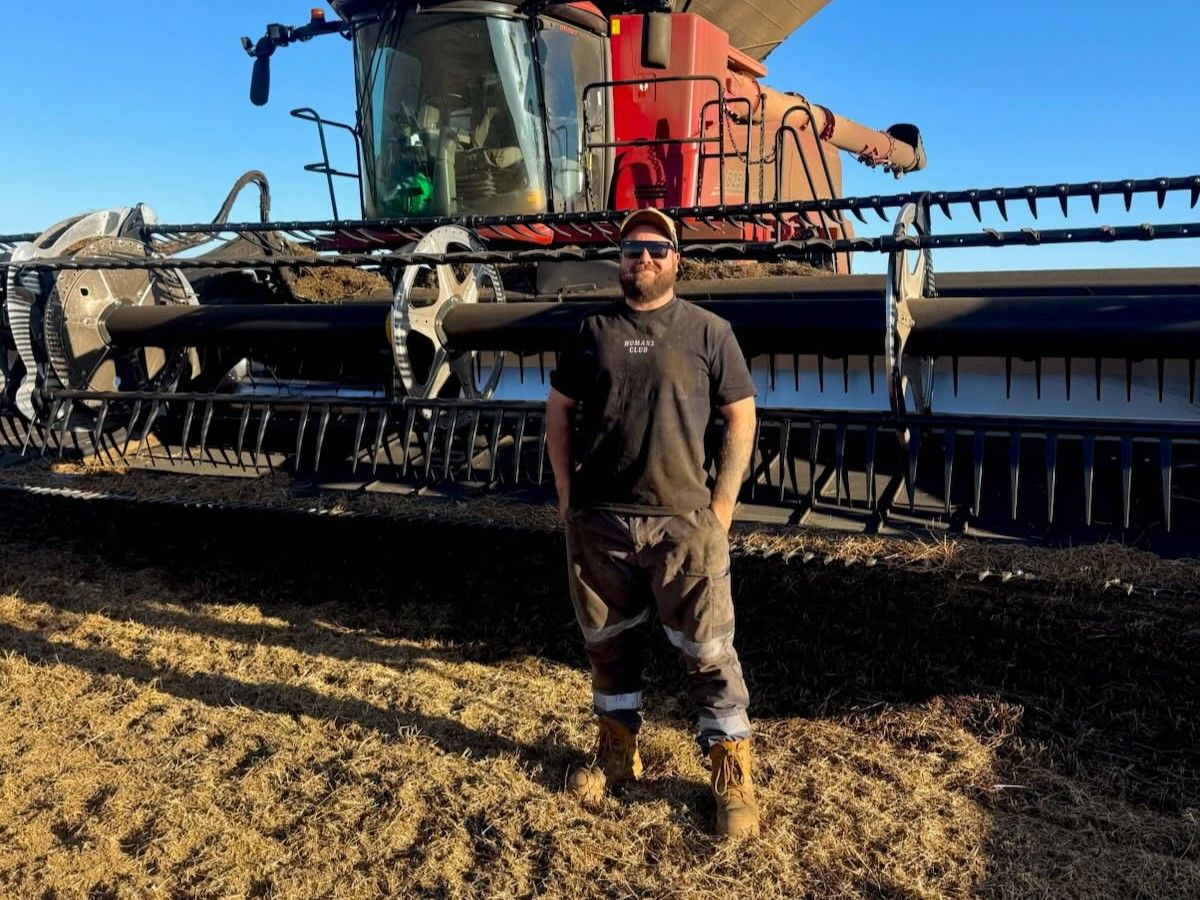
Hi, my name is James Waters, and I'm a first-generation farmer with a foot in two very different farming operations across South Australia.
Although farming wasn't always the dream, agriculture has been part of my life for as long as I can remember. I grew up in farming communities and around regional Australia, and over time what started as an interest has become a lifestyle I genuinely love.
About a year ago, I purchased my first block of farmland near Renmark in the Riverland. Today, I share-farm that property with a neighbouring grower while building my agricultural career working for Peta and Dean Wilmott on their 6,000-plus hectare cropping operation near Kimba on South Australia's Eyre Peninsula.
I'm a qualified electrician by trade and spent several years working in a country town. Looking for a new challenge, I moved into the remote underground mining sector, where I gained valuable experience and learnt a great deal professionally. But over time, I realised I was drawn to the variety and sense of purpose that agriculture offers.
Four years ago, I made the switch into farming and haven't looked back. What I enjoy most is that no two days are the same. Whether it's machinery, fabrication, welding, technology, agronomy or simply watching a crop grow, there's always something new to learn and always an opportunity to improve the system. Add in the fresh air, strong community spirit and lifestyle that farming provides, and it's hard to imagine doing anything else.
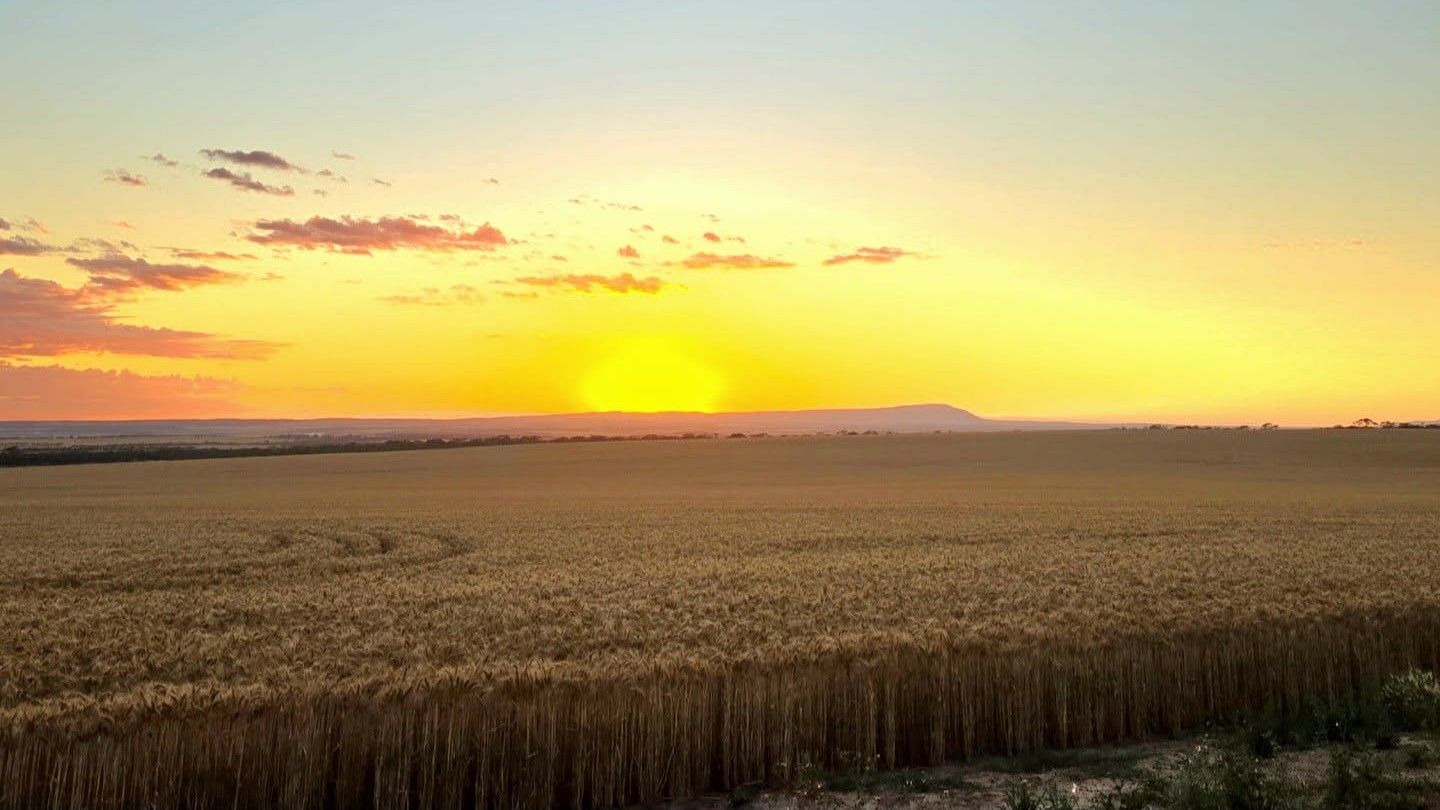
My block near Renmark sits on heavy red clay loam country and is currently growing wheat. While the Riverland is typically considered a low-rainfall environment, this season has been anything but typical. The crop is looking exceptional and has benefited from one of the better years the district has seen in recent times.
At Kimba, we're currently harvesting around 2,000 hectares of lentils alongside wheat and barley. It's been a standout season there as well, and it's exciting to see what favourable conditions combined with good management and modern farming technology can achieve.
After several tough seasons and drought conditions across much of South Australia, it's been rewarding to see strong crops right across the state. Wherever you travel, there's a sense of optimism that's been missing for a few years. In parts of the Upper Eyre Peninsula, many growers are saying it's the best crop they've ever seen, which is pretty remarkable given the seasons some businesses have had to battle through in recent years.
One of the biggest lessons I've learnt since moving into agriculture is just how much pressure growers are under. Working on a large-scale operation has given me a front-row seat to the challenges that come with balancing rising input costs against uncertain returns at the end of the season. Despite those pressures, I'm optimistic about the future of our industry.

Agriculture is evolving rapidly, and technology is changing the way we farm. With labour becoming harder to source and retain, tools such as automation, satellite mapping, drones and precision agriculture are helping growers improve efficiency and make more informed decisions.
One technology I've particularly enjoyed exploring is drone technology. What started as a personal interest has quickly become a practical tool on farm. Drones make it possible to identify poorer-performing areas within paddocks, map problem zones and target improvements.
Community is another aspect of farming that stands out. Across regional Australia there is a willingness to share knowledge, lend a hand when needed and support others through difficult seasons. That sense of community is one of the industry's greatest strengths and something I value highly.
Being involved in grain production also provides a real sense of purpose. Watching a crop develop throughout the season and seeing the results at harvest never loses its appeal. Having worked across several different industries throughout my career, agriculture has proven to be the most rewarding. There is a strong connection between effort and outcome, and every season provides new opportunities to learn, adapt and improve.
Looking ahead, I'm excited by the pace of innovation across the industry. Advances in technology, automation and crop genetics are creating new opportunities for growers and helping Australian agriculture become more productive and efficient.
While I'm still at the beginning of my own farming journey, purchasing my first block of land has been a significant milestone. Working alongside Peta and Dean Wilmott has also given me the opportunity to learn from a highly respected farming business and gain experience that I can apply to my own operation.
Farming may not have started out as the plan, but it's become a lifestyle that I genuinely love, and I'm excited to see where the journey takes me next.