
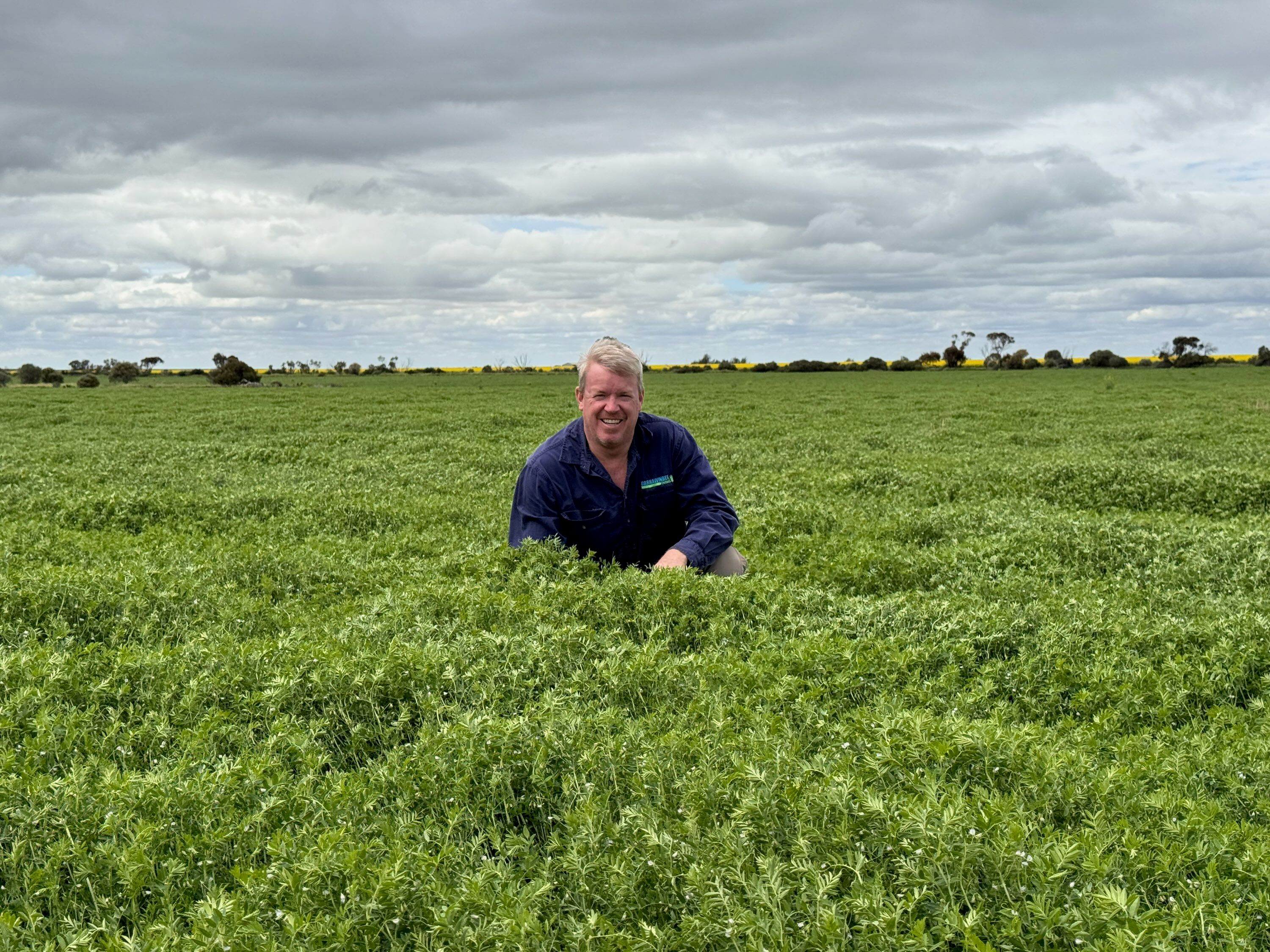
Hi, I’m Brady Green and I farm 10,000 hectares about 20 kilometres south of Yuna in Western Australia with my wife Erin and two daughters, Madi and Holly.
Our start to this season was a lot earlier than usual, so we’re not as reliant on conditions to finish. We’ve had some good early rainfall which allowed us to establish crops from mid-April through to mid-May, with everything out of the ground by mid-May. In comparison, last year the break was in late May, so we had to dry-seed everything and wait for the first rain to arrive. We have had less rain than last season so crop averages will be well back, however they still look about average. We’ve been lucky to have a lot more rain events this season, and after a recent good rainfall, everything is fertilised and tracking well.
Like many growers in our region, we were hit pretty badly by the mouse plague. It definitely took a toll, but we were fortunate to get on top of it pretty quickly through baiting and managed to deal with it pretty well in the end.
Our cropping program is largely the same this year, although we did end up putting a bit more canola in once I was confident that we had the nutrition available to support it. We thought that was going to pay dividends, particularly with canola prices remaining firm and moving up. We’ve also reduced our lupin area and are growing 350 hectares of lentils instead. For us, lentils are very much a commercial crop – they have to pay their way.
Our country is mainly sandplain with some red loams and one of the biggest projects we’ve undertaken in recent years has been soil amelioration. Starting in 2017, we spent four years tackling our sandplain country through deep ripping and spading. It was a real mission and a major investment in both time and money, but we’ve had incredibly satisfying results. We’ve seen yield improvements of more than a 30 percent increase and were able to reduce some of the frost challenges we were experiencing by changing the way those soils function and managing stubble differently.
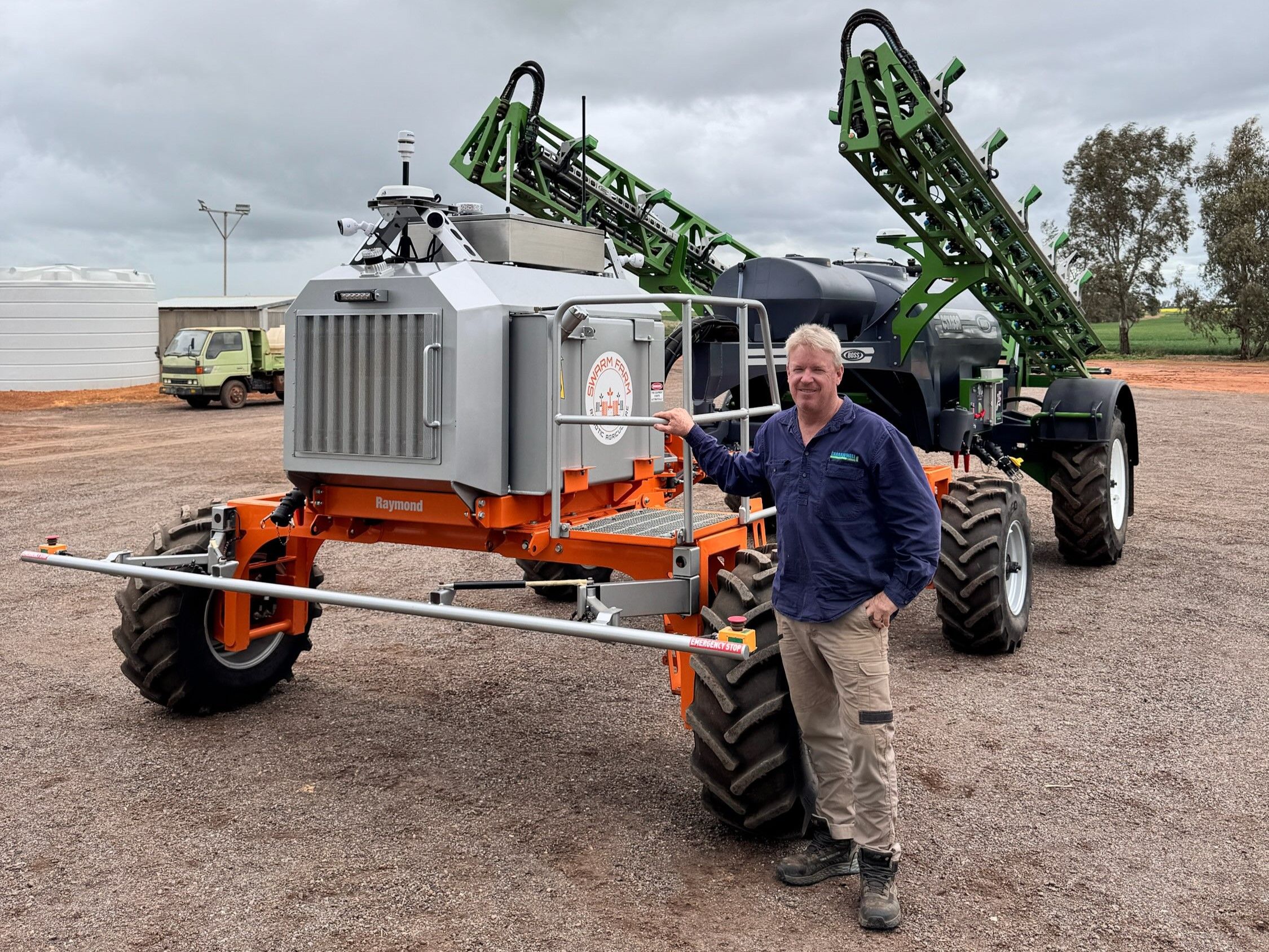
Technology is becoming an increasingly important part of our business. Last year we added a SwarmFarm robot to the operation, and it’s been a great addition. Previously, we relied on a contractor to do our spot spraying, but now we can do it ourselves and fit it around our harvest schedule. The biggest advantage isn’t just reduced chemical use, it’s the ability to hit weeds like calthrop and fleabane at exactly the right time and then return for follow-up applications as needed.

We're always focused on creating a good culture within the team. We have three full time and many long-term casual staff working on farm. I know how hard it can be to find good staff, so we’ve been pretty lucky in that regard. Every Monday morning, our spray team piles into the car with our agronomist for what we jokingly call the “School of Bill”. We spend the morning reviewing what happened the previous week, discussing priorities for the week ahead and making sure everyone is aligned before entering everything into Agworld. That process has become a really important part of how we communicate and to make sure we’re all on the same page, with the right information at our fingertips for the week ahead.
I believe industry collaboration is also very important. I spent six years as president of the Yuna Farm Improvement Group (YFIG) and continue to host research trials on our farm. Working with grower groups and organisations such as Northern Agri Group and Mullewa Dryland Farmers Initiative helps ensure information is shared across the region.
When I think about what I'm most proud of, it comes back to passing the farm on to the next generation. I desperately don't want to sell the farm, so we're doing everything we can to create a good culture and an environment where the girls want to be involved.
They are both living off farm at the moment, Holly has just started studying commerce at Melbourne Uni and Madi is studying at Marcus Oldham in Geelong. They’re both very much involved in ag and I mean, why wouldn’t you want to be?! Succession is a very common conversation in our household. We’re not up to the nitty-gritty of who gets what. It’s more about making sure the girls understand the business and know that if they're interested, it's a pretty good lifestyle.
If I could give my younger self one piece of advice, it would be simple: keep being good to your people and build a strong culture. Technology will change, machinery will change and farming systems will evolve, but good people remain at the heart of every successful business. That's something worth investing in.