
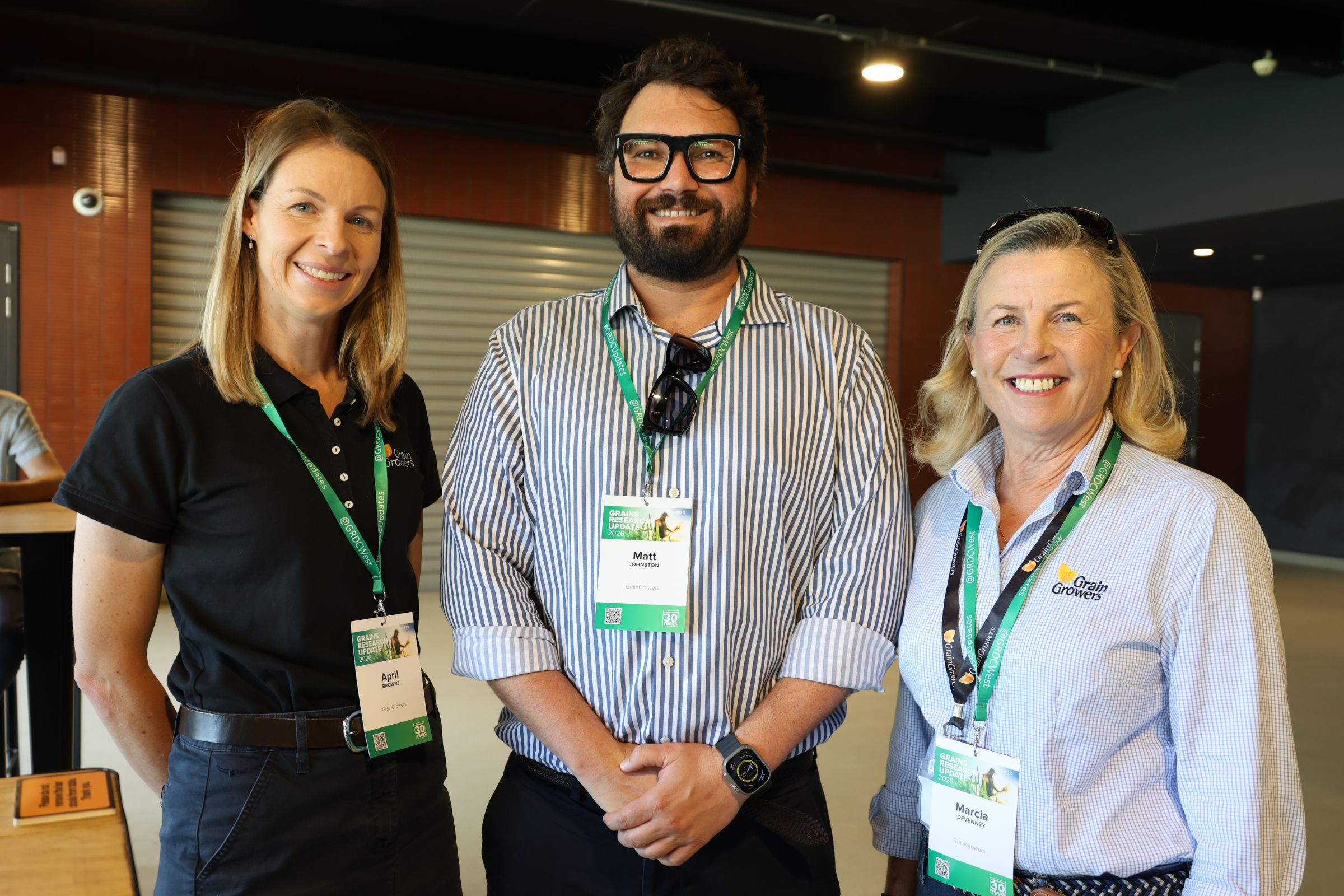
From sessions on ‘Managing grass weeds in oats for grain and key agronomic levers’ to ‘Measuring and managing emissions on-farm’ and the industry’s management of its social licence to operate, GRDC’s WA updates had it all.
A record of more than 900 attendees converged on Optus Stadium in Perth for the annual update where they heard from a range of presenters about their respective research, development and extension projects.
The West’s burgeoning canola industry was a key focus with Spiegare’s Cameron Begley challenging attendees to consider how recycling atmospheric carbon to manufacture low carbon liquid fuels instead of drilling petroleum will play in Australia’s future fuel mix.
The notion that the driver of a low carbon liquid fuel future was shifting from a decarbonisation mindset towards a liquid fuel security mindset also didn’t go unnoticed, particularly given the supply chain vulnerabilities of petroleum.
Meanwhile, Kadambot Siddique from the University of Western Australia questioned what was stopping Western Australia from growing more pulses, while also highlighting opportunities for local growers amid growing wheat production in parts of India at the expense of pulses.
James Hunt’s keynote on the decision-making process behind nitrogen fertiliser use was very well-attended with the University of Melbourne researcher exploring how these decisions are made and the wider outcomes in terms of the effect on yield, quality, labour and profit.
Daniel Kidd from the Growers Group Alliance presented on a series of trials being conducted on grain legume development and extension across WA. The project drew on GRDC analysis which suggested WA growers were concerned about yield reliability, profitability and management challenges.
In the sustainability space, a thought-provoking panel explored the measurement and management of emissions on farm with growers urged to identify and exploit emissions reduction opportunities progressively as opposed to ‘eating the elephant whole’. They were also encouraged to explore the raft of free tools on offer to inform their decision-making and help them better understand emissions in the supply chain.
All in all, this year’s updates challenged thinking, identified opportunities and provided all attendees with plenty to ponder going forward.
Image courtesy of Grain Central.